

At a glance
- Wired and wireless TRUCKMATE configurations deliver the same truck axle weighing accuracy but suit different operational requirements.
- Wired configurations are often a practical fit for high-throughput depots and established sites with fixed weighing locations.
- Wireless configurations provide greater flexibility for multi-bay yards, space-constrained sites and temporary weighing operations.
- The best configuration depends on workflow requirements, site layout and future operational plans.
Accurate truck axle weighing is a core part of daily operations across road transport depots and logistics yards. Whether your goal is preventing axle overloads, staying compliant or improving load visibility, how reliable that weighing process is depends on your system setup and where it sits within your site layout.
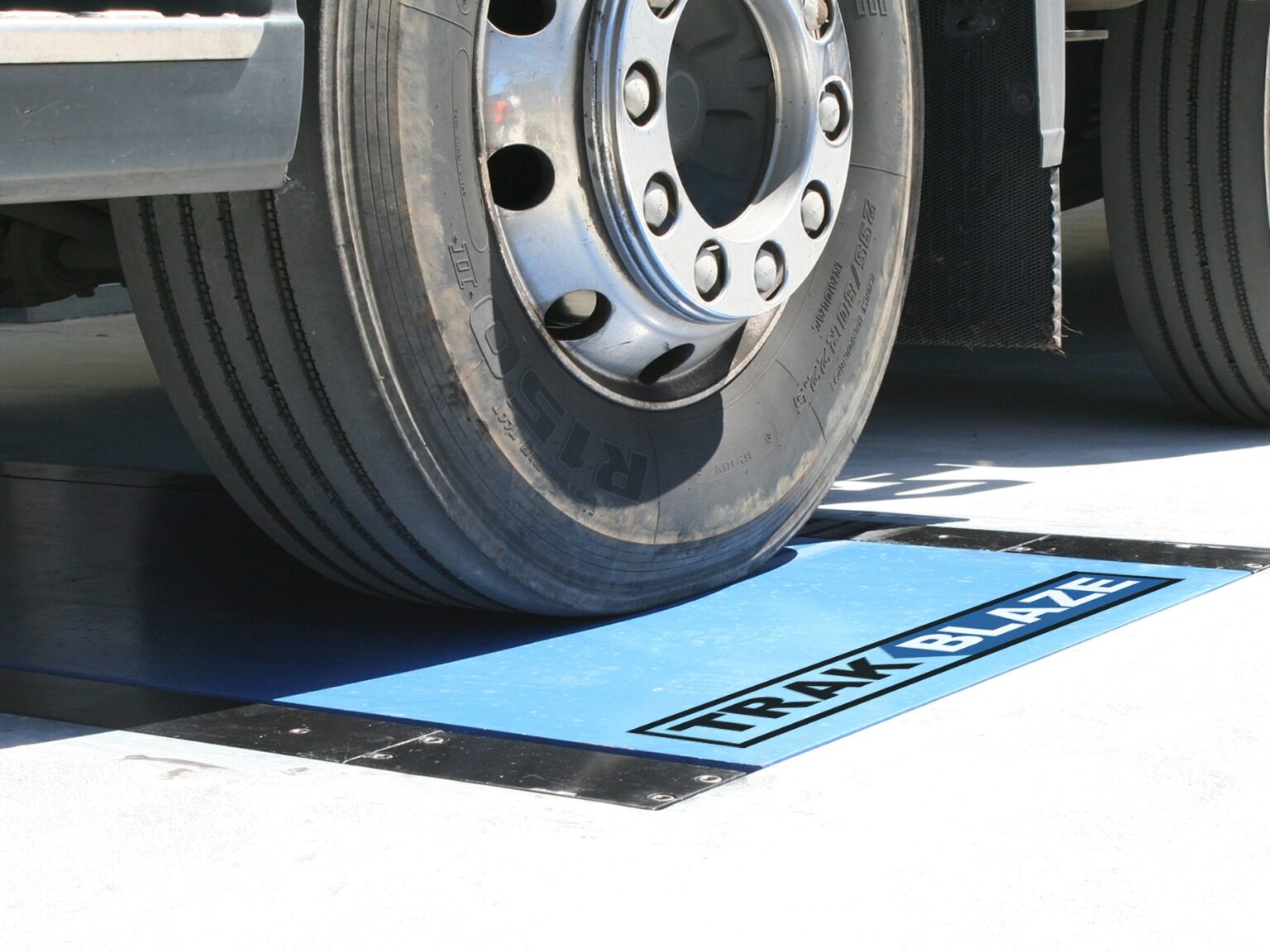
TRUCKMATE is a portable truck axle scale from Trakblaze, tested and developed alongside government and private companies, both locally and internationally. It’s proven to be accurate, reliable and user-friendly, built to deliver consistent wheel and axle weight data across a range of transport and logistics environments. When you’re planning a TRUCKMATE deployment, one of the most practical decisions you’ll make is whether a wired or wireless configuration fits your site better.
Both options are built to deliver the same weighing accuracy, but each suits a different layout, workflow and set of operational requirements. This blog covers both wired and wireless TRUCKMATE configurations to help you choose the option that best suits your site layout and operational needs.
What Are Wired and Wireless TRUCKMATE Configurations?
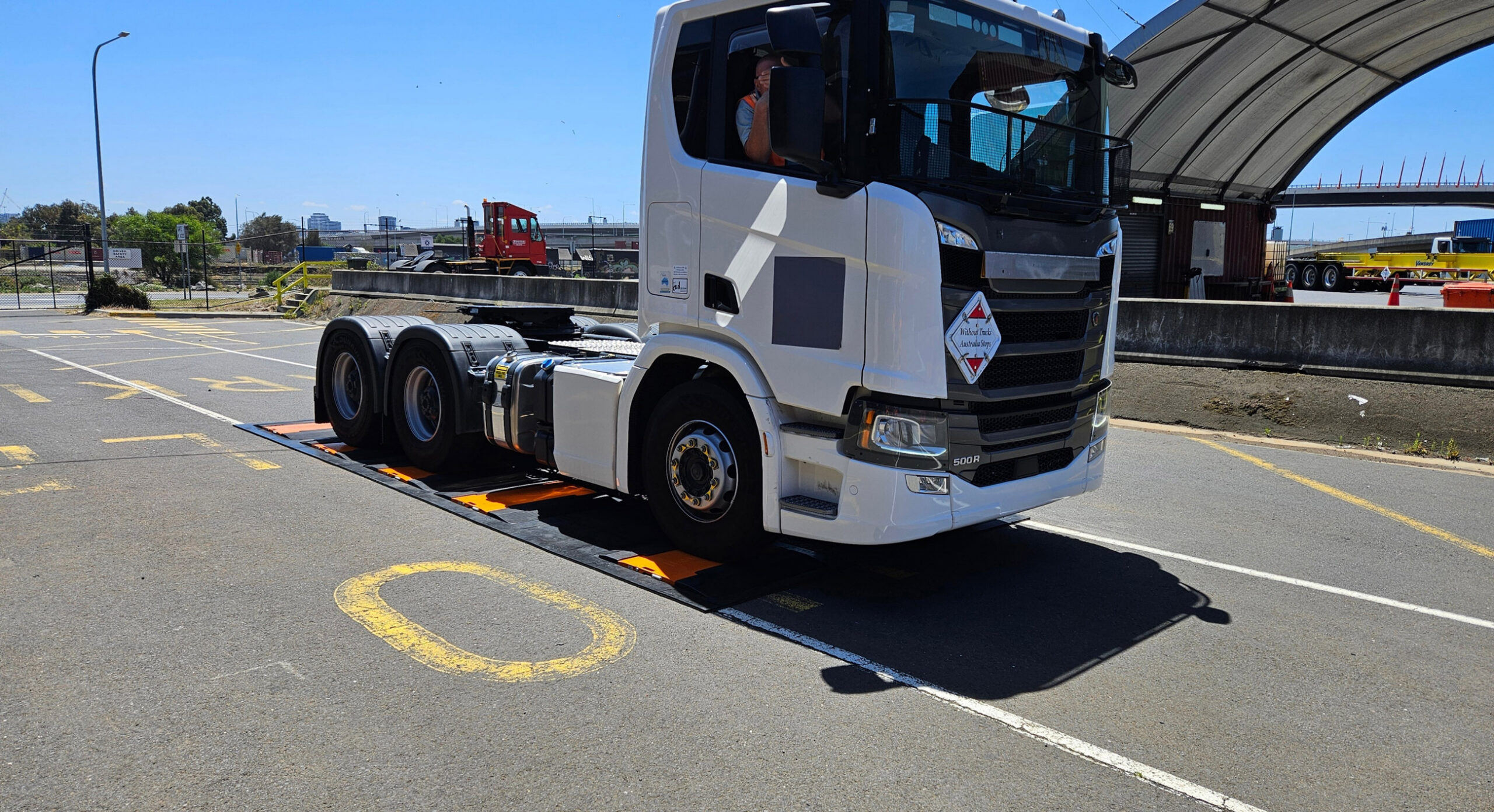
The wired TRUCKMATE configuration operates as a 2-pad system, with physical cables linking the weighing pads to the control unit. A built-in cable protector helps prevent measurement errors if a cable is damaged. This configuration suits permanent or semi-permanent weighing locations where cable routing is straightforward, protected and unlikely to change, making it a practical fit if your site has established workflows and fixed traffic patterns.
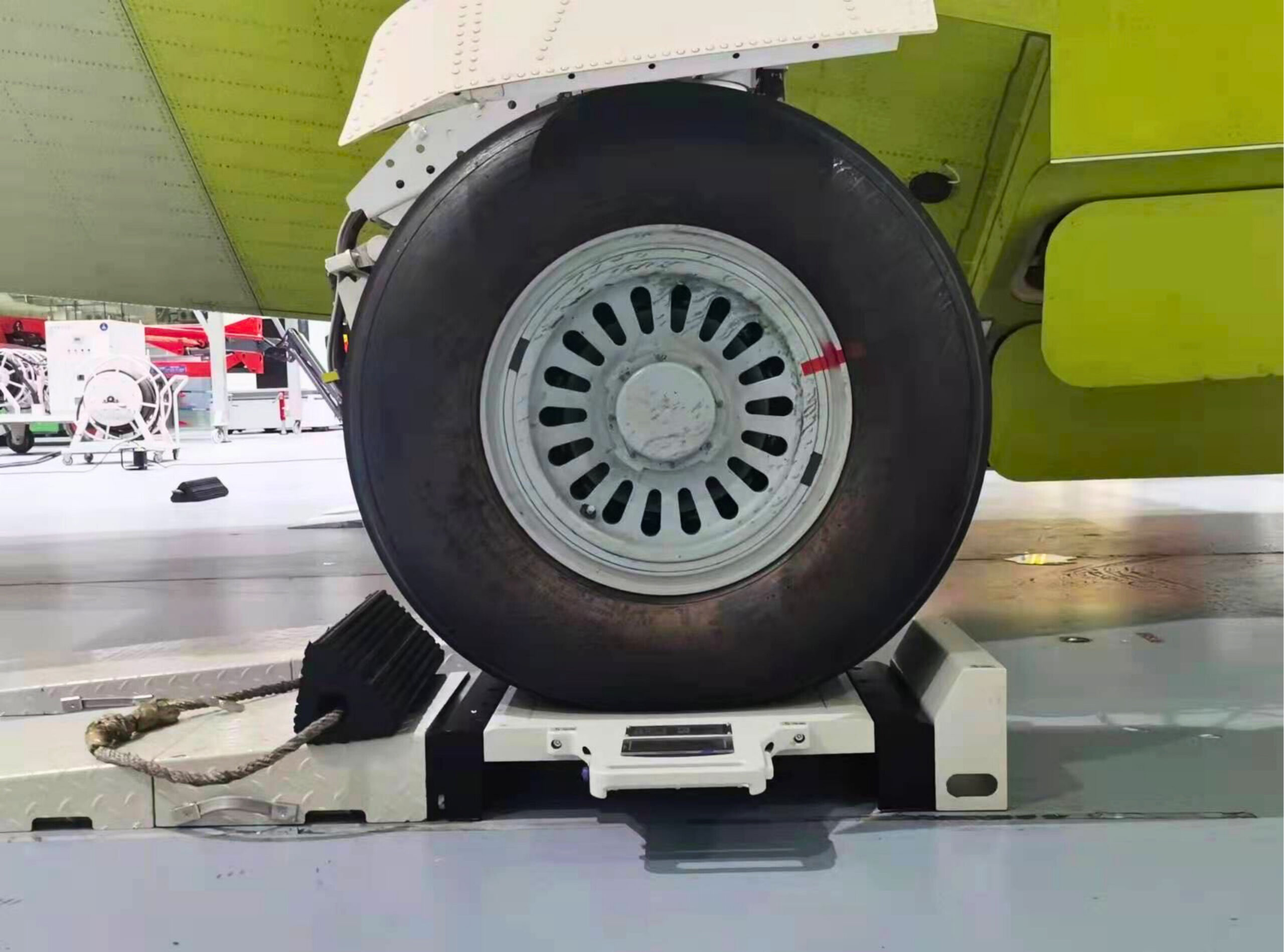
The wireless TRUCKMATE configuration is available in 2-, 4-, 6- or 8-pad setups, with data transmitted from each pad to the control unit via wireless signals. Wireless connectivity gives you easy data transfer and real-time weight monitoring across the site. Its range extends up to 25 metres, supporting flexible pad placement across different bays and weighing points. This makes it well-suited if your weighing locations need to shift between bays, your site layout is irregular or you run mobile and temporary deployments.
Both configurations are built on the same TRUCKMATE platform, so you get the same static and dynamic weighing accuracy regardless of which connection method you choose.
The table below outlines the key considerations side by side:
| Consideration | Wired TRUCKMATE | Wireless TRUCKMATE |
| System expansion | May require updates to physical cable connections | Additional pads are incorporated through the wireless network |
| Site modifications | Future layout changes may involve reviewing cable pathways | Future changes may involve reviewing wireless coverage |
| Deployment planning | Focuses on cable routing and protection | Focuses on communication coverage and pad placement |
| Infrastructure dependency | Operates through the installed cabling infrastructure | Operates through a wireless communication network |
Find Your Fit at a Glance
- Your site has a fixed, established weighing location
- Cable routing is straightforward and protected
- You need a direct connection
- Site layout is unlikely to change
- You need a fast setup
- Your site layout is irregular or subject to change
- You operate across multiple bays or locations
- You need portable or remote weighing capability
Which TRUCKMATE Configuration Best Suits Your Layout?
Choosing the right configuration depends on how your site actually operates day-to-day. Here is a practical breakdown to help you match the right truck-weighing configuration to your layout and workflow:
High-Throughput Transport Depots
If your depot processes a high volume of trucks daily, you need a weighing setup that is consistent, fast and reliable. When the same trucks move through the same entry or exit points every shift, a wired configuration matches that routine well. Fixed cable connections keep your system stable and ready to go, with no repositioning needed between operations.
You don’t need to adjust pad placement, check wireless connectivity or reconfigure the system between weighing sessions. If throughput and consistency matter most at your depot, a wired TRUCKMATE configuration is a practical and dependable choice.
Read More: Portable vs. Permanent Scales: Which is Best for Logistics Fleets?
Multi-Bay Logistics Yards
Logistics yards are divided into multiple zones, and weighing needs often shift between them rather than staying in one fixed location for long. Loading schedules change, vehicle types vary and compliance checks may be required at different points in the yard during the same shift. Managing this kind of variability with a fixed cable setup can work against you rather than for you.
A wireless TRUCKMATE configuration gives your logistics yard the flexibility to weigh trucks wherever the work is happening. With a range of up to 25 metres and support for up to 8 pads, the system can cover multiple weighing points across your yard from a single control unit. Here is what that means in practice:
- Pads can be repositioned between bays without interrupting active weighing operations
- Multiple weighing points can be covered simultaneously across different yard zones
- Real-time weight data feeds through to the control unit regardless of where the pads are placed
- No cable pathways need to be reviewed or rerouted when yard activity shifts
Space-Constrained or Irregular Site Layouts
Not every depot or yard is designed for straightforward cable routing. Tight access points, irregular traffic flow paths and cluttered yard areas can make running cables between weighing pads and a control unit difficult. In these situations, a wireless weigh pad system is often the more practical solution.
A busy urban freight depot illustrates this well. Space is limited, vehicles move through narrow lanes and there is little room to run protected cable paths without creating trip hazards or obstructing vehicle access.
A wireless TRUCKMATE configuration allows the pads to be placed where they are needed, without being limited by the site layout. This helps create a cleaner and safer setup that matches your available space instead of forcing cable paths into it.
Established Sites with Existing Infrastructure
Transport depots with long-established operations have usually already worked through their layout and infrastructure challenges. Cable pathways are protected, weighing bays are defined and vehicle traffic moves through predictable routes. The infrastructure required for a wired setup is often already available in this kind of environment.
That existing infrastructure is exactly what makes a wired TRUCKMATE configuration the stronger choice here. Rather than building wireless coverage across a site that doesn’t need it, you can connect straight into your established cable infrastructure with minimal additional civil works.
There is no need to manage wireless range or troubleshoot connectivity, and the pad placement does not need to be changed between shifts. The system installs cleanly, runs consistently and fits the site without requiring changes to the existing layout.
Remote or Temporary Weighing Operations
Certain operations don’t have the benefit of fixed infrastructure at all. Construction haul routes, remote freight checkpoints and temporary weigh stations all require a portable truck weighing system that can be set up quickly and moved once the job is complete.
TRUCKMATE’s wireless design works well in these situations. Each pad weighs just 18 kg, and the full system can be set up in approximately 10 minutes. This makes the portable truck scale practical for you, even in remote locations or sites without existing infrastructure. Whether it’s a one-day compliance check or a longer temporary operation, the wireless setup gives you accurate axle weight data regardless of location.
Read More: Portable Truck Scales for Efficiency in Remote Logistics
Both wired and wireless TRUCKMATE configurations deliver the same accurate truck axle weighing performance, but each suits a different operational reality. A wired setup suits high-throughput depots and established sites with existing cable infrastructure, where stability and minimal reconfiguration are most important. A wireless setup is better for multi-bay, space-constrained or temporary operations where flexibility and fast deployment are key.
The right choice isn’t about which configuration is technically superior. It’s about which one matches your daily workflow and layout. Understanding your layout, workflow and future needs helps you choose the TRUCKMATE configuration that delivers the most practical everyday value.
Ready to deploy the right TRUCKMATE configuration for your site? Partner with Trakblaze, a reliable truck weighing technology provider that understands the demands of road transport and logistics operations. Our team can help you assess your site layout, workflow requirements and pad configuration needs so you get the right setup quickly.
Get in touch with us today to take the next step.
FAQs
What types of vehicles can be weighed using TRUCKMATE?
TRUCKMATE is designed to weigh a broad range of heavy vehicles across transport, logistics and industrial operations. These include:
- Semi-trailers and articulated trucks
- Rigid trucks and delivery vehicles
- Construction vehicles and equipment
- Agricultural vehicles and machinery
- Fleet vehicles requiring compliance or load checks
Can wired and wireless TRUCKMATE configurations deliver the same weighing accuracy?
Yes. Each pad is built on the same platform, with 20 independent high-technology load cells under the top plate providing a static accuracy of approximately 0.5% to 1% or better. The configuration choice affects how the system is deployed across a site, not how accurately it weighs.
How do I choose the right truck scale for my facility?
Choosing the right truck scale depends on several factors, including your daily vehicle volume, site layout, axle load requirements and whether you need a portable or fixed solution.
What is the difference between axle load and gross vehicle mass in fleet management?
Axle load and gross vehicle mass are two distinct measurements that both play an important role in fleet management. Gross vehicle mass is the total combined weight of a vehicle and its load, while axle load is the weight carried by each individual axle group.