




At a glance
- Truck scales provide precise, real-time weight data that improves inventory accuracy and reduces errors in large retail distribution centres.
- Truck weighing systems help retailers avoid fines, enhance workplace safety, and improve load stability by ensuring compliance with weight regulations.
- Integrating truck scales with warehouse and transport management systems streamlines operations and minimises bottlenecks.
- Accurate weight management lowers fuel costs and delivers long-term financial savings.
Modern retail logistics operates on a significantly large scale. These distribution and loading-bay operations involve coordinating hundreds of truckloads, thousands of SKUs, and complex inventory systems, all while meeting strict timelines and compliance requirements.
When the scale is so big, there is always a chance of inaccuracy with the weight of each truck. Still, even small inaccuracies in weight measurement can ripple across the supply chain, leading to stock discrepancies, lost revenue, inefficiencies, and regulatory issues.
As a result, truck scales have become a vital tool for retailers looking to streamline these processes. These scales help improve inventory accuracy, verify loads and reconcile freight, optimise warehouse workflows, reduce safety risks, and control costs by delivering precise, real-time weight data.
This blog covers everything you need to know about how large retailers use truck scales to optimise back-of-the-house logistics.
Inventory Management and Stock Accuracy
Accurate weight management is very important in retail logistics. Without precise data, even minor discrepancies can compound across thousands of SKUs, leading to miscounts, lost revenue, and disrupted supply chains. Truck scales play a pivotal role by providing a reliable, real-time measurement of goods moving in and out of distribution centres.
Ensuring Precise Load Weights
Large retail distribution centres typically receive dozens to hundreds of truckloads daily, often containing a variety of products with different densities, package sizes, and tare weights. If the weight of incoming goods is estimated or recorded inaccurately, these small errors accumulate over time, leading to overstocking, tying up capital and storage space, or causing stockouts that affect sales and customer satisfaction.
Truck scales capture the true gross and net load weights of vehicles as goods arrive on site. When retailer teams compare scale-verified readings with supplier manifests or bills of lading, any discrepancies can be detected immediately, helping maintain accurate inventory records, prevent disputes, and ensure regulatory compliance.
Streamlining Receiving and Dispatch
Without accurate weight measurement, checks often require manual inspection, estimation, or extra paperwork to reconcile any mismatches. A truck scale installed at the receiving dock or dispatch point provides immediate weight data.
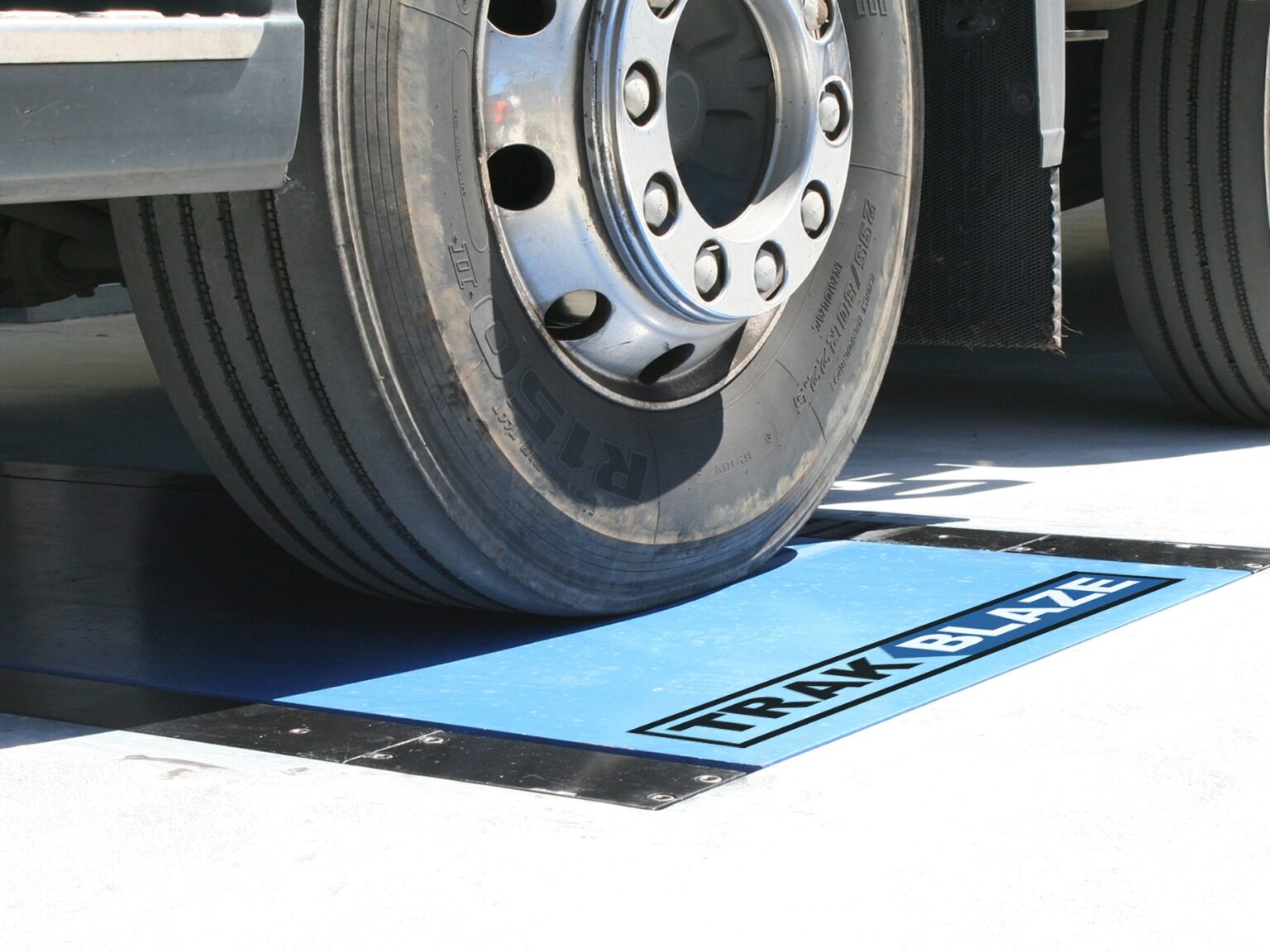
For instance, truck scale models like FORCE1 – Truck Axle Scale can be installed at the entry or exit, which can weigh the truck at speeds of up to 6kph (4mph). This data feeds into warehouse management systems (WMS) or ERP systems, automatically updating inventory records.
This real-time weight data accelerates the check-in/check-out process. For example, instead of waiting for manual counting or visual inspection of goods, staff get a weight reading, which can be cross-checked with the expected weight from purchase orders or sales orders.
Preventing Shrinkage and Loss
Shrinkage loss of inventory due to theft, damage, misplacement or errors is a major cost for large retailers worldwide. When a truck arrives and the weight is significantly less than expected, even after accounting for packaging/tare, it can flag potential issues like missing cartons, underfilled pallets, or incorrect fulfilment by the supplier.
Likewise, during dispatch, trucks loaded to leave should match system expectations; early detection of overloads or underloads helps prevent costly rework, customer complaints, or returns. Over time, tracking these discrepancies gives insight into recurring supplier issues or internal process weaknesses.
Regulatory Compliance and Legal Considerations
Compliance with local and national weight regulations is essential when retailers are transporting goods in bulk. Overloaded or improperly balanced trucks risk fines and also jeopardise driver and public safety. By integrating truck scales into logistics operations, retailers ensure every load meets legal standards and internal safety benchmarks.
Meeting Weight Regulations
Every country, and many sub-national jurisdictions (states/provinces), enforce weight limits on commercial vehicles: gross vehicle weight, axle loads, bridge limits, etc. Overloading can result in fines, impoundment, insurance issues, and regulatory risks.
Truck scales ensure that trucks leave distribution centres in compliance with the law. They help validate that both gross weight and axle distribution conform to applicable regulations.
Reducing Workplace Safety Risks
Improperly loaded or overweight vehicles pose safety risks inside the warehouse and in vehicle transit. For example, too much weight on one side or over a single axle can lead to instability, possibly causing roll-overs, impaired braking, or structural failures of the vehicle.
Truck scales help ensure that loads are properly balanced (axle by axle, if required), that the gross weight does not exceed safe limits, and that any loading operations comply with internal safety protocols.
Operational Efficiency
In high-volume distribution centres, operational efficiency determines profitability. Truck scales streamline weighing processes, reduce manual checks, and provide real-time data for better decision-making. This helps retailers move goods faster while minimising bottlenecks and optimising staff and resource allocation.
Faster Turnaround Times
A fixed or portable truck scale integrated into the receiving or dispatch area reduces delays caused by manual weight estimation, paperwork, or detours to external weigh stations. Retailers using efficient scales can reduce process times for trucks at docks, allowing for more trucks per shift and a smoother workflow.
Real-time weight data lets logistics managers forecast loading and unloading duration with greater accuracy. Likewise, accurate weight data helps in deciding the number of vehicles required for dispatch, route planning, and load consolidation.
Technological Integration
Large retailers are increasingly linking truck scales with digital systems like WMS, ERP, transport management systems (TMS), and even IoT sensors.
When scales feed data directly into software,
- Weight data can be captured automatically and compared with purchase orders or dispatch records, thereby reducing errors associated with manual entry.
- Alerts can be generated if the weight exceeds allowable limits or deviates from expected weights, triggering an investigation before shipment.
- Route planning can be adjusted based on actual load weights to avoid roads or bridges with weight restrictions, or to optimise fuel consumption.
- Analytics can identify trends, such as which suppliers consistently underdeliver and which products exhibit high variance.
Financial Benefits
Every kilogram of miscalculated weight can have financial consequences, from increased fuel costs to compliance penalties. Truck scales help retailers control these costs by providing accurate data that supports better planning and execution. Over time, this accuracy translates into substantial savings and improved operational margins.
Reducing Overweight Fines
In many jurisdictions, overweight trucks risk fines, penalties, and even shutdowns. By ensuring that each load is weighed and compliant, retailers avoid these unpredictable costs. Over time, savings from avoiding penalties can be substantial, especially for large retail operations handling heavy or frequent shipments.
Minimising Fuel & Maintenance Costs
Fuel efficiency is directly affected by payload weight. Overloading decreases fuel efficiency, increases wear on tyres, brakes, suspension, and other vehicle components, leading to higher maintenance costs. Likewise, under-loading is inefficient as part of the fixed cost of the vehicle remains unused.
With accurate weight measurement, retailers can better match load to vehicle capacity, consolidate goods where possible, avoid unnecessary trips, and optimise utilisation, all contributing to fuel savings and lower total cost per unit delivered.
The bottom line is that precision and efficiency are vital for staying competitive in today’s retail market. Truck scales provide weight readings and accurate data, enabling smarter inventory management, ensuring regulatory compliance, and enhancing safety across back-of-house operations.
As retail supply chains continue to grow in complexity, truck scales stand out as a strategic long-term investment. For retailers with multiple distribution centres or seasonal peaks, portable truck scales deliver the flexibility to set up anywhere without compromising accuracy.
If you are looking for ways to optimise your retail logistics, consider partnering with Trakblaze. We offer a range of truck scales suited to the demands of modern retail operations. Contact us today to find a weighing solution for your operational needs.
FAQs
What types of truck scales are best for retail distribution centres?
For retail distribution centres, fixed weighbridges are ideal for high-volume operations in a fixed location, while portable truck scales provide flexibility for seasonal or multi-site operations. Many retailers use a combination of both to strike a balance between throughput and adaptability.
How often should truck scales be calibrated?
Truck scales should be calibrated at least once or twice a year, depending on usage frequency and regulatory requirements. Regular calibration ensures accuracy, compliance, and reliable data for inventory and logistics planning.
Are there portable options for retailers with multiple locations?
Absolutely. Portable truck scales, such as TRUCKMATE, are designed for easy setup and relocation, making them ideal for retailers managing multiple distribution centres or seasonal overflow sites. They provide accurate measurements without requiring permanent infrastructure.